

Trump Signs Executive Order Seeking Oversight of AI Models

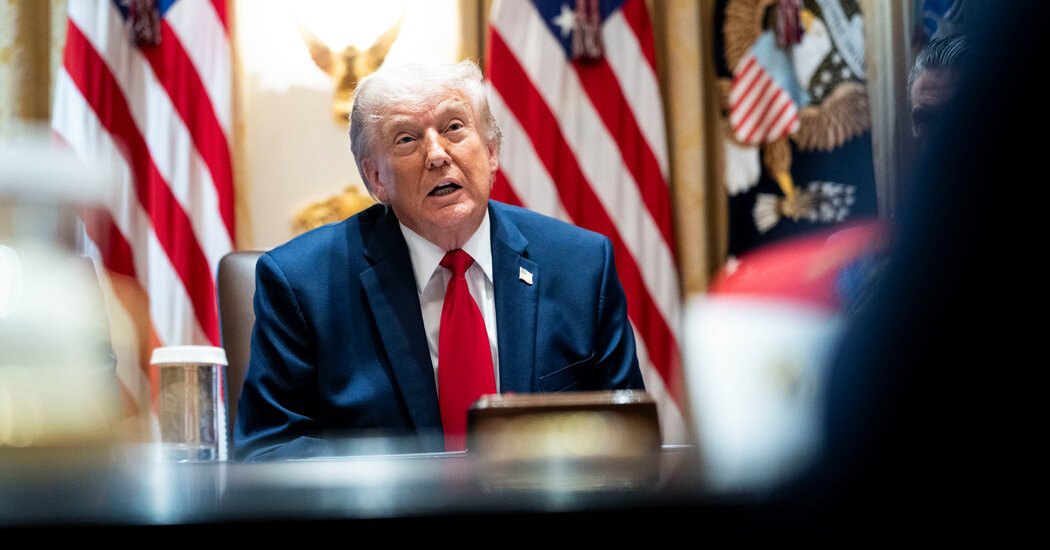
President Trump signed an executive order on Tuesday that asked technology companies to voluntarily give the government oversight of new artificial intelligence models before releasing them to the public, a shift for an administration that had promoted a hands-off approach to the powerful technology.
The order followed months of debate in the Trump administration over how to handle AI and its effects on cybersecurity and national security. Last month, Mr. Trump scrapped an executive order on AI — which would have created a window of up to 90 days in which the government would review new AI models before they were released — just hours before he was set to sign it.
Tuesday’s signing followed a meeting at the White House on Monday that Mr. Trump convened with Treasury Secretary Scott Bessent, Defense Secretary Pete Hegseth and David Sacks, who was previously the administration’s AI czar, among others, two people familiar with the confidential meeting said. Mr. Sacks, who had opposed the order, blessed a revised version after the timeline for reviews was cut to 30 days from 90 days, the people said. That helped persuade Mr. Trump to move forward with the signing.
The order is the Trump administration’s biggest step toward regulating artificial intelligence. It is a reversal of the president’s anything-goes stance, which he adopted when he returned to office last year. That approach was designed to help American tech companies beat China and bolster the economy.
Under the new order, tech companies would voluntarily give the government a window of up to 30 days to review their new AI models before releasing them to the public. The order also asks the Treasury secretary to form an AI “cybersecurity clearinghouse,” which would review security vulnerabilities discovered by AI models.
“Advanced AI capabilities make our nation stronger, but also introduce new national security considerations that require coordinated action across executive departments and agencies,” the order said.
Liz Huston, a White House spokeswoman, said the executive order reflected Mr. Trump’s “common-sense approach of collaborating with industry to balance innovation and security, cementing America’s continued global dominance in AI and cybersecurity.”
Tech executives were scrambling to determine how the order would affect an AI industry that has enjoyed largely unchecked economic growth. Some companies said the order would allow them to point to participation with the government and ease public worries about AI Others were concerned the order could slow development and lead to stricter regulation down the line.
Brad Smith, Microsoft’s president; Chris Lehane, OpenAI’s chief global affairs officer; Kent Walker, Google’s president of global affairs, and other executives separately praised the order as “an important step” that would balance AI safety and innovation.
Sam Altman, OpenAI’s chief executive, is scheduled to visit the White House on Wednesday for a meeting that was planned before Mr. Trump signed the order, a person with knowledge of the meeting said.
Anthropic and Meta did not immediately provide a comment.
Many tech executives were caught off guard on Tuesday by Mr. Trump’s choice to sign the order with little fanfare or a photo opportunity. Executives from OpenAI, Anthropic, Microsoft, Meta and Google had been invited in recent months to discuss the policy with the Trump administration, and some had been en route to the White House last month for the signing of the previous order before it was cancelled.
At the time, tech executives, including the venture capitalist Marc Andreessen, had spoken to Mr. Trump about their concerns, two people with knowledge of the discussions said. While the executives supported an order, they worried that the window of up to 90 days for AI model reviews would delay the technology’s development. They emphasized that keeping American companies competitive against China was crucial, the people said.
Mr. Sacks, the former AI czar, ultimately persuaded the president to hold off on the order last month, the people said. The White House chief of staff, Susie Wiles, a proponent of the executive order, has since worked to get the order back on track, two people familiar with the process said.
The decision for the White House to begin a formal oversight process of AI models began in April, when Anthropic announced a new AI model, Mythos, which the company said could find software vulnerabilities and lead to a cybersecurity “reckoning.” Government officials, banks and others worried that future AI models could find vulnerabilities that US enemies would exploit.
Mythos landed as public opinion on AI soured, with mounting fears over how the technology would affect jobs, energy prices, education and mental health. In March Quinnipiac University poll of American adults, 55 percent said they viewed AI as a force for harm rather than good.
Mr. Trump has faced pressure to increase the government’s regulation of AI In May, MAGA allies including Stephen K. Bannon, Amy Kremer and three dozen pastors signed a letter urging the president to adopt a mandatory vetting process for AI models. They warned that the systems could harm cybersecurity, and that tech companies could not be trusted “to police themselves.”
Members of the group organized a rally to be held on Wednesday in Washington to call on the Trump administration and Congress to start safety testing models. Brendan Steinhauser, chief executive of the Alliance for Secure AI Action, a nonprofit dedicated to AI education, said the rally would take place even after the signing because “we would rather see this be mandatory than voluntary.”
“This is important to the president, so we think all the companies will comply, and it will have the effect of being required,” he said, adding that “the political winds have shifted in our direction on this, mostly because the capabilities are increasing, and there are concerns about advanced AI without safeguards.”


