

Blog
Crypto Entrepreneur Justin Sun Sues Trump Family’s World Liberty Financial, Accusing It of Fraud

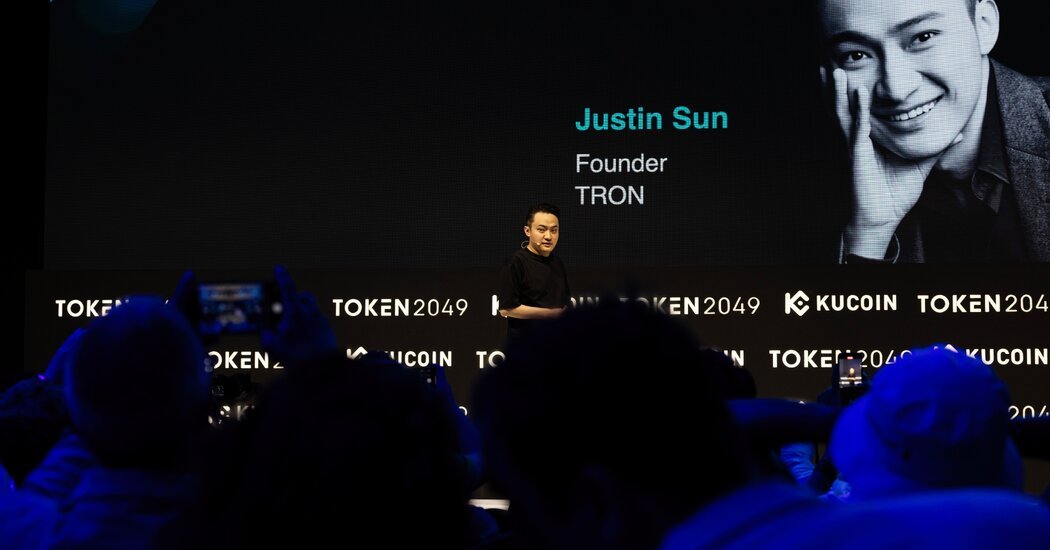
Not long after the 2024 presidential election, the cryptocurrency entrepreneur Justin Sun bought $75 million in digital coins from World Liberty Financial, the Trump family’s crypto start-up.
World Liberty said it was “honored” to work with him. Mr. Sun, known for his globe-trotting promotion of the crypto industry, called World Liberty an “excellent project.”
Now that partnership has imploded. On Tuesday, Mr. Sun sued World Liberty in US District Court in the Northern District of California, claiming that the company had tried to pressure him into buying another of its digital coins and threatened to report him to law enforcement in the United States.
The lawsuit represented an extraordinary break in a business partnership that once seemed mutually beneficial. Mr. Sun backed World Liberty when the company was struggling to get its coin off the ground. The investment put him into business with the Trump family while he was fighting a fraud lawsuit by the Securities and Exchange Commission, creating a public outcry about conflicts of interest.
Mr. Sun paid a $10 million penalty to resolve the SEC suit in March. World Liberty has denied that any of its deal making was part of a political quid pro quo, and Mr. Sun has said he bought the coins because he believed in “the potential for this project’s growth.”
In the lawsuit filed Tuesday, Mr. Sun said World Liberty had prevented him from selling the coins he purchased. World Liberty restricted his access after he resisted pressure from its executives to buy hundreds of millions of dollars of a new digital currency that the company had recently created, the lawsuit said.
Accusing World Liberty of “egregious misconduct,” Mr. Sun said the company’s leaders “see the project as a golden opportunity to leverage the Trump brand to profit through fraud.”
A representative for Mr. Sun did not respond to a request for comment. On social media, World Liberty’s chief executive, Zach Witkoff, called Mr. Sun’s claims are “entirely meritless.”
“He engaged in misconduct that required World Liberty to take action to protect itself and its users,” Mr. Witkoff said.
The Trump family unveiled World Liberty in September 2024. It teamed up with President Trump’s friend Steve Witkoff, Mr. Witkoff’s sons Zach and Alex, and two little-known entrepreneurs, Chase Herro and Zak Folkman.
World Liberty began selling a cryptocurrency called $WLFI, with a large slice of the revenue allocated to the Trumps. The coin was a “governance token” designed to give its buyers a degree of voting power over the firm’s development.
But the coins would be “locked,” meaning that buyers would not be able to resell them on the open market, at least for a while.
Initial demand for $WLFI was underwhelming. But after Mr. Sun made his purchase, World Liberty went on to record a total of more than $500 million in sales, a significant windfall for the Trumps.
Early last year, World Liberty created a second cryptocurrency, a so-called stablecoin, USD1, that was designed to maintain a price of $1. According to the lawsuit, World Liberty engaged in “a sustained and escalating campaign to pressure” Mr. Sun to buy $200 million of USD1 and make an equity investment in World Liberty.
When it became clear that Mr. Sun did not want to invest, the lawsuit said, the leaders of World Liberty “became hostile toward Mr. Sun.”
In September, World Liberty started allowing investors in $WLFI to sell the coins, a potential profit-making opportunity for those early backers. Mr. Sun was prevented from moving his funds. World Liberty froze his holdings “in retaliation for his refusal to capitulate to their demands,” the lawsuit said.
After the dispute spilled onto social media, Mr. Herro, one of World Liberty’s founders, told Mr. Sun said that “know your customer” documentation he had submitted when he bought the $WLFI was inadequate, according to the lawsuit. (Financial institutions often require this type of documentation, sometimes called KYC, to make sure that customers aren’t involved in crimes.)
The complaint said Mr. Herro had threatened to report Mr. Sun to US authorities “over these unspecified KYC issues.”
“The so-called KYC issues appear to be nothing more than a fabricated basis for attempting to manipulate plaintiffs,” the lawsuit said.
#Crypto #Entrepreneur #Justin #Sun #Sues #Trump #Familys #World #Liberty #Financial #Accusing #Fraud


